When Barak Obama was elected, many in the sustainability movement believed that they finally had an ally in the White House. However, the President’s agricultural appointments tell a different story.
|
|||

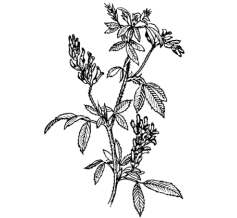
A coalition of agriculture groups and 75 Members of Congress wrote to Tom Vilsack, urging the USDA to allow limited planting of Roundup Ready alfalfa while the agency completes an Environmental Impact Statement. 
Ever since the Supreme Court handed down its mixed 7-1 decision, ruling that the lower court overstepped its boundary by issuing an injunction on the planting of genetically modified alfalfa, some lawmakers were spurred to action. 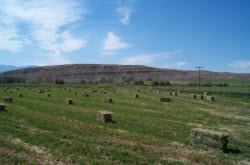
The United States Supreme Court handed down its first ever decision concerning genetically modified crops and it is a mixed result for farmers, consumers and environmental groups. 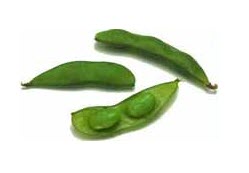
From the company that brought you plastics and rubber (DuPont) comes a genetically modified soybean that is altered to exhibit alleged health benefits. 
A 13-state survey of honey bee pests and diseases that will help USDA scientists to determine the factors that may be contributing to the decline of honey bee colonies nationwide. Professor Brian Wynne was vice chairman of a steering group set up by the Food Standards Agency to gauge the public mood on genetically modified (GM) food. Prof Wynne said that he resigned when it became clear that the consultation was biased in favour of GM. Earlier in the week another member of the group, Dr Helen Wallace, Director of the non-governmental organisation Genewatch, resigned in protest at the Food Standard Agency’s allegedly close links with the agri-chemical industry. 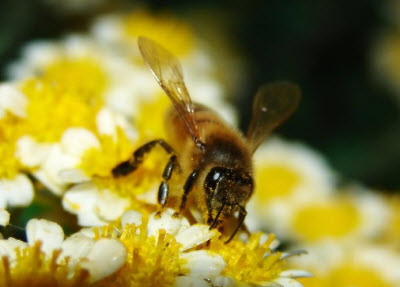
Recent research from USDA points to a correlation between a fungus and a family of viruses that may be working together to cause the Colony Collapse Disorder in honeybees. Many still believe, however, that other causes such as pesticide use in agriculture and GMOs that produce pesticides, also play a role in the collapse. Last week, current and former chicken growers, mostly from the South, gave attorney general Eric Holder and USDA secretary Tom Vilsack accounts of a lack of competition, poverty-level earnings and bait-and-switch tactics among the big chicken producers. “This system takes hard working farmers and makes them indentured servants on their own land,” Kay Doby, a former chicken farmer from North Carolina, told a crowded room at Alabama A&M University. 
We review and provide legal analysis of the oral argument in the Monsanto v Geertson matter heard recently by the Supreme Court. 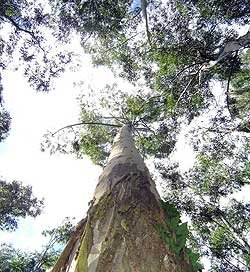
Ignoring criticis and finding their concerns to be “unlikely,” on May 12, 2010 APHIS approved for continued field tests the planting of experimental genetically modified eucalyptus trees across seven states. May 8, 2010 |
 1 1Until recently, not many consumers were aware of the widespread use of a toxic and environmentally damaging chemical, hexane, in the manufacturing of “natural” soyfoods such as vegetarian burgers, nutrition bars, and protein shakes. The use of chemical solvents such as hexane is strictly prohibited in organic food processing, yet its use is widespread in the “natural” soy industry, including in some products labeled as “made with organic soybeans,” such as Clif® Bars. Hexane, a neurotoxin, is listed as a “hazardous air pollutant” by the U.S. Environmental Protection Agency (EPA), and grain processors, including soy processors, are responsible for more than two-thirds of all hexane emissions in the United States. 
Monsanto claims that it is pursuing a legal battle over the right to grow genetically modified alfalfa because it is concerned with farmers, fairness and choice. Yet Monsanto’s appeals in the case have a lot more to do with protecting its right to continue selling GM seeds and pesticides. 
Today, the U.S. Supreme Court is hearing oral arguments in the case of Monsanto v. Geertson Seed Farms. At stake is a decision issued by California District Court which issued a permanent injunction against any further planting of genetically engineered alfalfa crop in 2007. 
After airing another arguably favorable report on genetically modified crops without acknowledging Monsanto as Marketplace’s sponsor, the program is soliciting listeners’ comments as to whether the program should announce Monsanto’s sponsorship when airing reports discussing Monsanto and their products. 
A new study by Penn State University found widespread and remarkably high level pesticide and other toxicant contamination of bee hives. The study sheds light on how modern day agriculture contributes to Colony Collapse Disorder. 
The first genetically modified bananas were recently harvested in Australia. But there is little reason to celebrate as, like other GMOs, genetically modified bananas bring to the table the same unanswered questions and concerns about their impact on health and the environment. 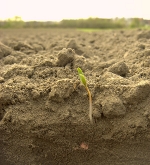
On March 16, 2010, a California District Judge denied plaintiffs’ request to halt the planting of GE sugar beets. The Court’s decision, however, left open the possibility of a ban, which is to be determined at the permanent injunction hearings in July. 
A recent study conducted by the U.S. Geological Survey found that ALL fish tested from 291 freshwater streams across the United States was contaminated with mercury.
After nearly a two-hour hearing yesterday, the U.S. District Judge Jeffery White reserved judgment as to whether a preliminary injunction, that would prevent the production or planting of genetically modified sugar beet seeds, should issue. Both parties, however, expect a quick decision as farmers will soon be ready to plant their crop. 
Organic farmers and environmental groups will seek this week an injunction to stop the planting of the GM beets until the U.S. Department of Agriculture’s Animal and Plant Health Inspection Service (“APHIS”) conducts an environmental impact statement (“EIS”). The lawsuit also seeks to bar the sale of sugar made from GM modified beets. In December 2009, the USDA has released its draft environmental impact statement proposing to deregulate Monsanto’s genetically engineered alfalfa. GMO Journal submitted its public comment to the agency urging it to continue regulating GE alfalfa. There is still time to take action before the March 3, 2010 deadline. Do you part — tell USDA to reject Monsanto’s GE alfalfa. 
The United States Department of Agriculture (“USDA”) and its Animal and Plant Health Inspection Service (“APHIS), which oversees biotechnology regulation, was heavily criticized by its own Inspector General 2005 audit report. Did APHIS change its way since then? 
There is little doubt that Monsanto-farmer contracts are fundamentally unfair to the farmers. In this case, David does not fair well against Goliath. But are such agreements also fundamentally unfair to society because, unless you grow it yourself, what the farmer grows is what you eat. |
Join GMO Journal and follow the latest headlines
    |
||
|
 |
|||
